05From cold storage to the table

Prepare and cook seafood with confidence

Plan the meal, thaw frozen seafood safely, prepare each cut and choose a cooking method that suits the product in front of you.

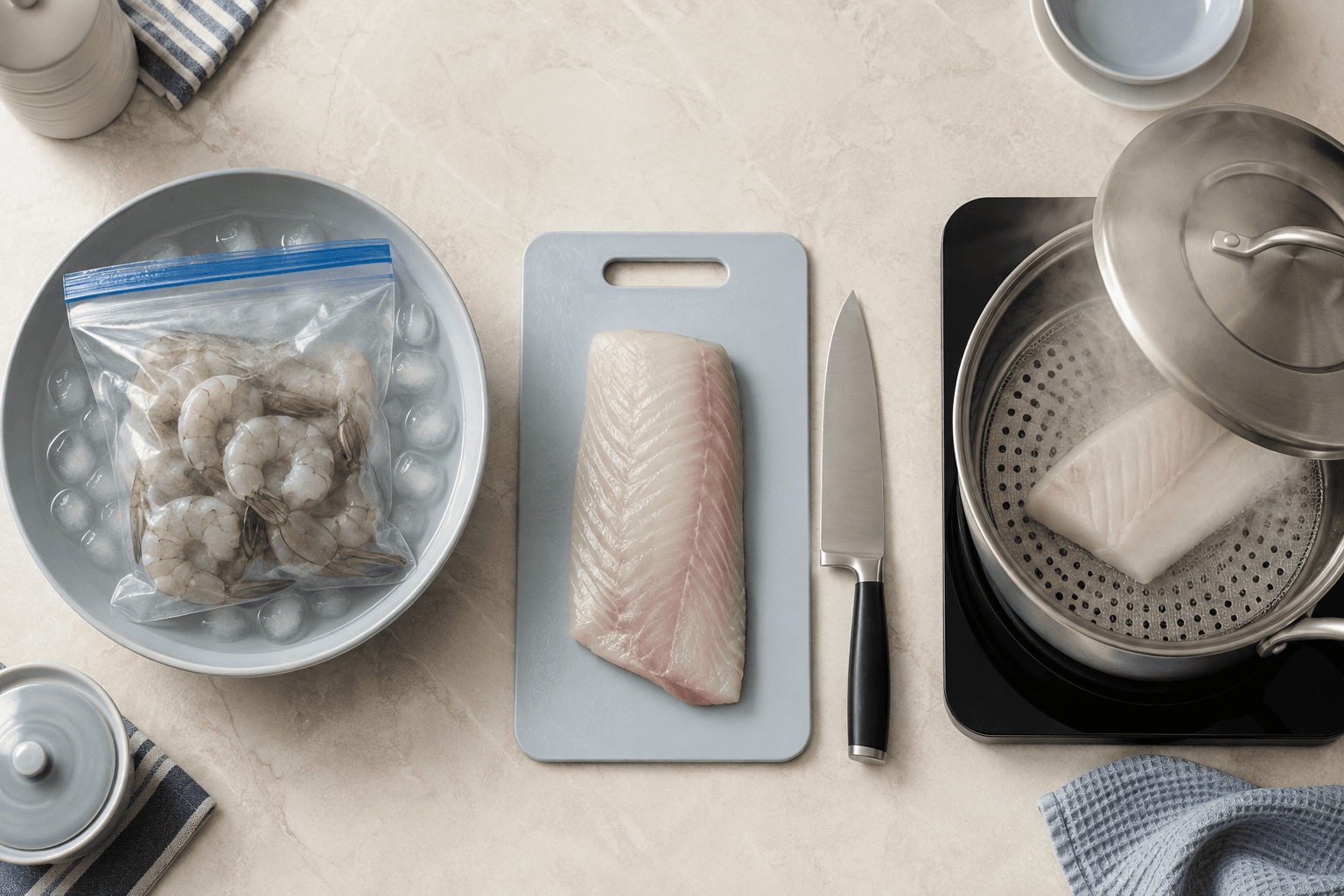
Sealed prawns thawing in ice water beside a clean fish preparation board and a steamer

Practical preparation

From delivery to dinner

Use the sequence in order when you need the full process, or jump to the chapter that matches the product and meal you are preparing.

01Before you buy

Plan the meal around the product

Begin with the dish, number of diners and equipment available. The product format should remove work—not add surprises at the chopping board.

  1. 01

    Choose the dish first

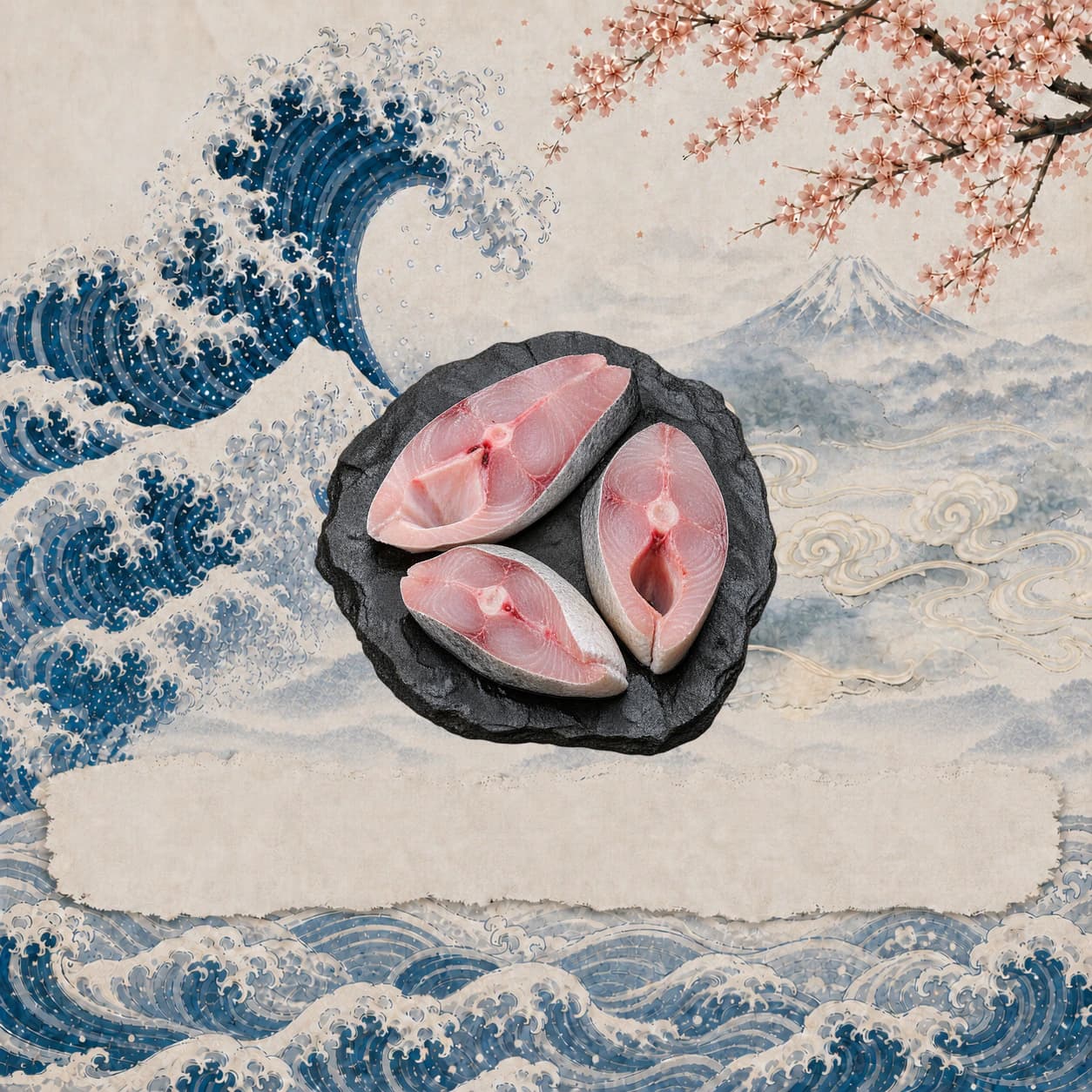
    Whole-style fish suits a shared centrepiece. Fillets and portions simplify plating. Steaks hold a defined shape, while slices, cubes and chunks move easily through soups, hotpot, curry and braises.

  2. 02

    Check the listed format

    Confirm the pack weight, size band, bone status and whether the product is fresh, frozen or live. Do not assume that every whole-style fish arrives scaled or gutted.

  3. 03

    Set out the right tools

    Match the largest fish or shellfish to the pan, steamer or oven tray before starting. Keep a clean serving plate and separate utensils ready for cooked food.

02Protect the cold chain

Receive and store it promptly

Cold seafood should return to a safe cold environment quickly. Keep raw juices contained and away from ready-to-eat food.

  1. 01

    Inspect before storing

    Check that chilled seafood is cold and frozen packs remain hard. Follow the product label and contact SeaBaeHo if the packaging is damaged or the delivered condition is unexpected.

  2. 02

    Keep chilled food at 4°C or below

    Place raw seafood in a covered container or tightly wrapped package on the lowest refrigerator shelf so it cannot drip onto cooked or ready-to-eat food.

  3. 03

    Keep frozen food frozen

    Store frozen seafood at −18°C or below until you are ready to thaw the amount needed for the meal.

03Frozen seafood

Thaw safely—never on the counter

The safest everyday method is planned refrigerator thawing. Faster methods need tighter temperature control and immediate cooking.

  1. 01

    Best method: refrigerator

    Keep the seafood sealed, place it on a tray on the lowest shelf of a refrigerator maintained from 0–4°C and allow enough time to thaw fully.

    Overnight refrigerator thawing is the recommended method, not something to avoid.

  2. 02

    Quicker method: ice water

    Keep the seafood inside a clean leak-proof package and submerge it in clean ice water kept at 4°C or below. Change the water frequently, then cook immediately.

    Do not place exposed seafood directly in the sink or water.

  3. 03

    Microwave only before cooking

    Use the defrost setting, turn or stir the food where practical, and cook it immediately because parts of the food may begin to warm during defrosting.

  4. 04

    Thaw fully

    Unless the package specifically gives a safe cook-from-frozen method, thaw seafood fully so the outside does not finish while the centre remains undercooked. Do not refreeze thawed food.

04At the board

Prepare the form you ordered

Use a stable, clean work area and keep raw seafood separate from food that is already cooked or ready to eat.

  1. 01

    Whole-style fish

    Confirm whether scaling, gutting or trimming is still required. Pat the prepared surface dry when using direct heat and support the fish well when turning it.

  2. 02

    Steaks, fillets and portions

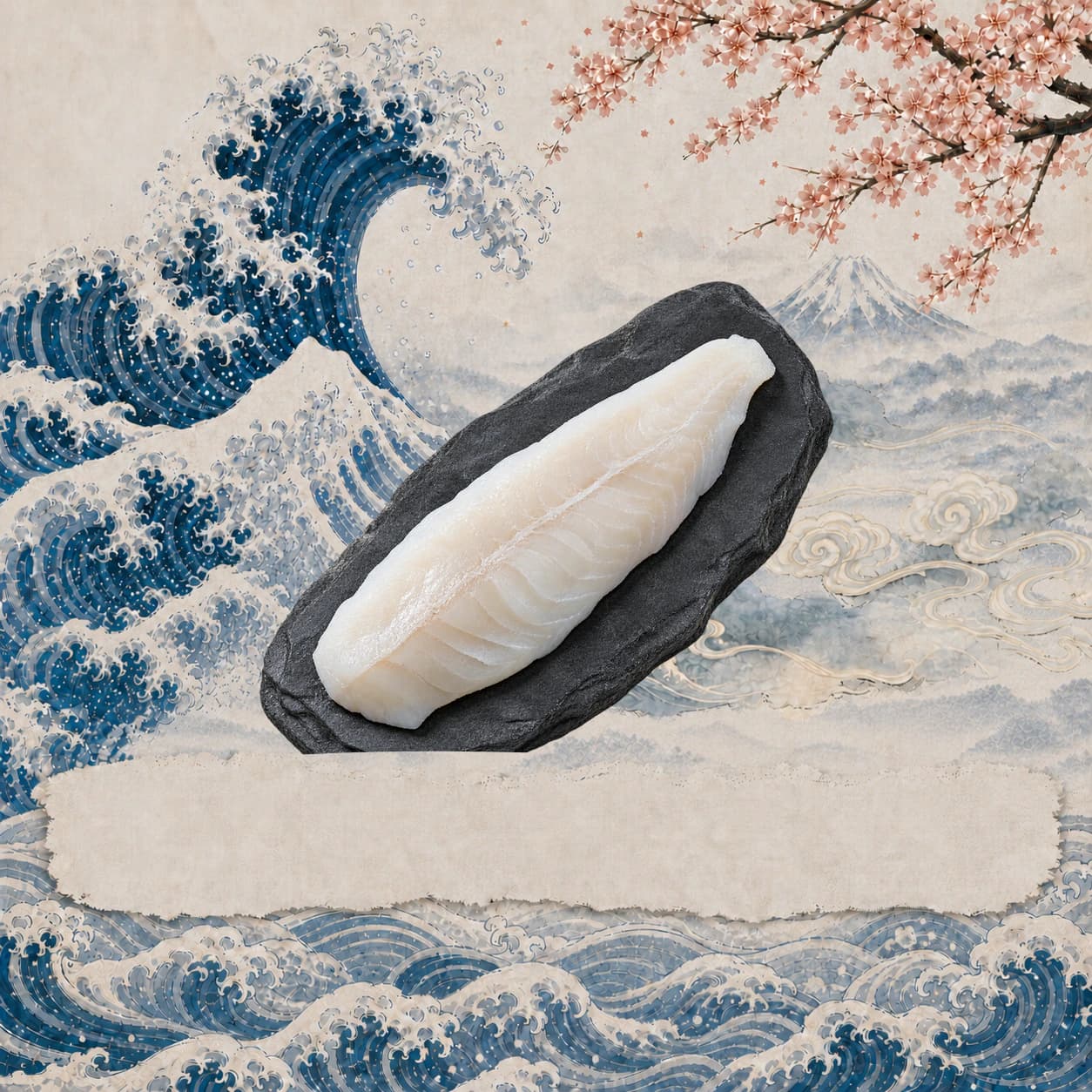
    Check thickness and bone status. Portion pieces to a similar thickness when cooking them together so the thinner pieces do not finish far ahead of the rest.

  3. 03

    Prawns

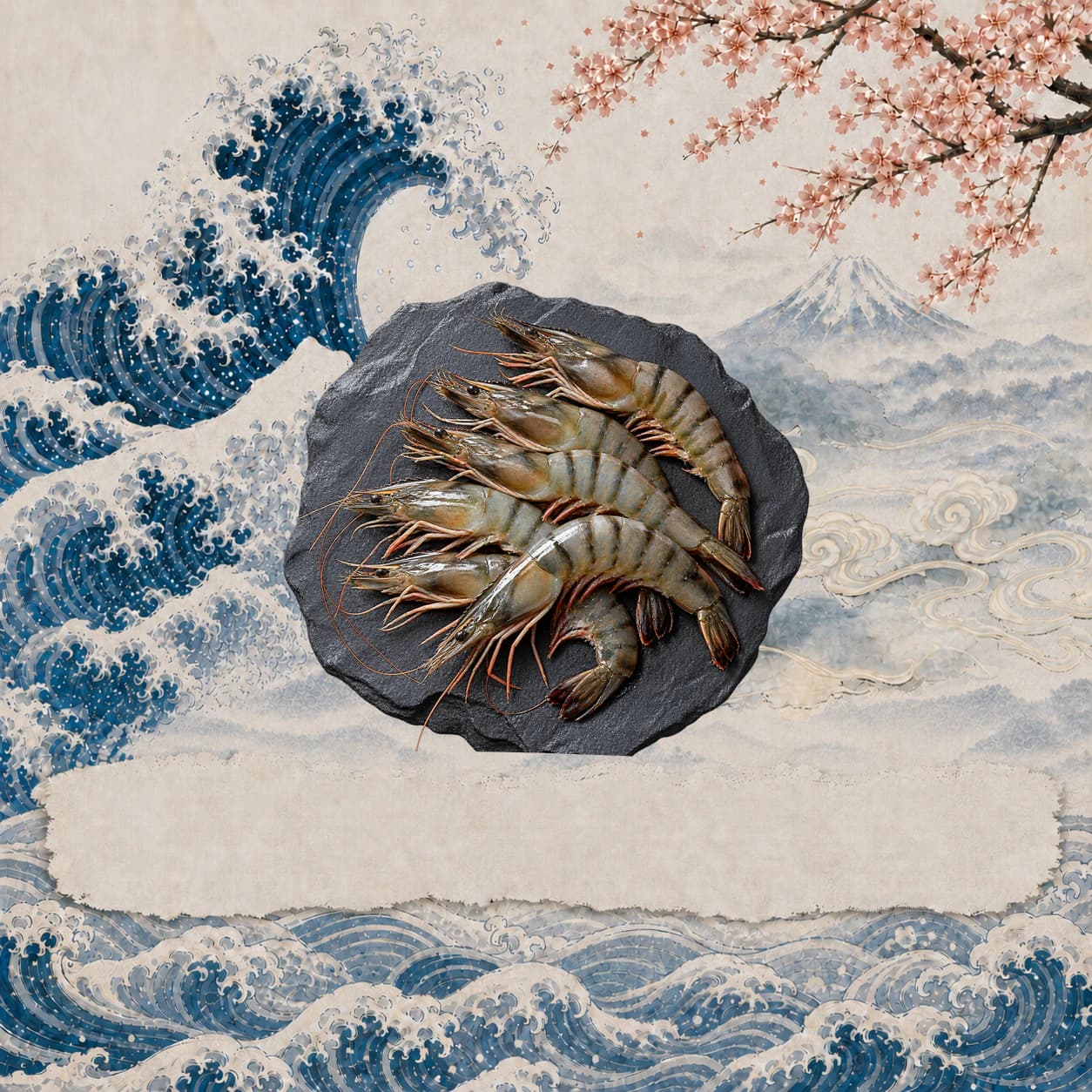
    Choose whether the shell, head and vein suit the dish, then work in small cold batches. Keep prepared prawns refrigerated until the cooking surface or broth is ready.

  4. 04

    Live crab and lobster

    Ask SeaBaeHo for handling guidance if you are unfamiliar with live seafood. Use stable tools, allow for sharp shell edges and prepare the animal humanely before thorough cooking.

05Choose the heat

Match the cooking method to the cut

There is no single cooking time for every size. Use the product’s thickness and shape, keep the heat controlled and check the deepest part before serving.

  1. 01

    Steam

    Best with whole-style fish, fillets, prawns and whole crab or lobster. Use steady steam and keep the lid closed; allow thicker body sections more time than thin edges.

  2. 02

    Pan-fry or sear

    Best with steaks, fillets, portions and prawns. Pat the surface dry, lightly oil the pan and avoid moving delicate pieces until the first surface releases cleanly.

  3. 03

    Bake or roast

    Best with whole-style fish, salmon sides, fillets and larger portions. Arrange pieces with room for even heat and check each piece separately when thicknesses differ.

  4. 04

    Grill or barbecue

    Best with prawns, fish steaks, firm portions and prepared lobster. Clean and oil the cooking surface, manage flare-ups and turn only when the seafood can be supported securely.

  5. 05

    Soup, hotpot or porridge

    Best with slices, cubes, chunks and prawns. Start with boiling broth, avoid overcrowding and let it return to a boil after raw ingredients are added.

    Use separate utensils for raw and cooked food, and do not remove food while newly added raw ingredients are still cooking.

  6. 06

    Curry or braise

    Best with steaks, chunks, cubes and prepared whole-style fish. Build the sauce first, settle the seafood in an even layer and simmer gently to reduce breakage.

06Before serving

Check doneness and serve cleanly

Visual cues help, but the thickest part is what matters. Anyone at higher risk of foodborne illness should avoid raw or undercooked seafood.

  1. 01

    Fish

    Cook thoroughly. The flesh should lose its raw translucency and separate easily with a fork. A clean food thermometer is useful at the thickest part; FDA guidance lists 63°C / 145°F for most seafood.

  2. 02

    Prawns, crab and lobster

    Cook until the flesh is firm, pearly and opaque. Check the deepest or thickest section rather than judging only by the outer shell colour.

  3. 03

    Move to a clean plate

    Never return cooked seafood to the raw plate. Use clean utensils, serve promptly and keep hot cooked food above 60°C if it is being held before serving.

In your kitchen

Handle with confidence.

Follow the pack

Product-specific storage, thawing and cook-from-frozen directions take priority over general guidance.

Avoid fixed cooking times

Size, thickness, starting temperature and equipment all change how long seafood needs. Check the thickest part.

Keep raw and cooked separate

Wash hands, boards, knives, utensils and work surfaces after raw contact and before they touch cooked or ready-to-eat food.

Sources & safety

Read the original guidance.

This is general preparation and food-safety guidance, not medical advice. Follow current product instructions and Singapore Food Agency guidance. People who are pregnant, very young, older or immunocompromised should avoid raw or undercooked seafood.